What to wear on the Kjerag hike
Footwear, at length, because it deserves it
Ankle support and a sole that bites. Those are the two requirements and they are not interchangeable. The ankle support is for the descent, when your legs are tired and your foot lands at an angle you did not plan; the sole is for the slab, which behaves like a completely different material once it is damp. Broken in, ideally. A brand new pair of boots on eleven kilometres of rock will produce blisters at exactly the point in the day when you most need to be walking well.
Can you do it in trainers? People do, and most of them get away with it, and I am not going to pretend otherwise because I watched them come back down grinning. What I also watched was the other group, the ones on the same footwear coming back slowly on a wet afternoon with an ankle strapped in somebody's spare sock. The odds are fine and the consequences are not, and that is a poor trade for a day you have travelled a long way for.
Layers, and the fog that makes them necessary
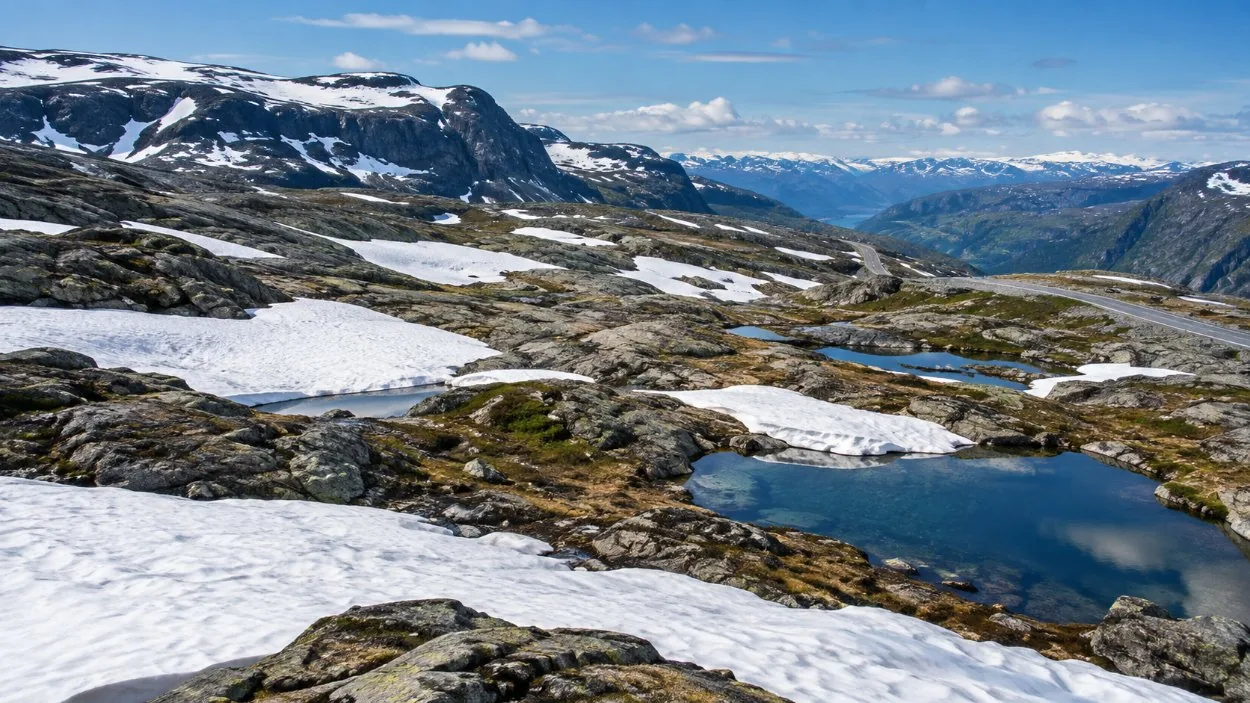
The thing about Kjerag that catches out sensible people is the gap between the car park and the plateau. I have stood at Øygardstøl in warm sunshine and watched a wall of fog sitting on the top of the mountain all morning, and people set off into it in shirtsleeves because what they could see was fine. The plateau is exposed, it is a few hundred metres higher, and the wind that comes up the fjord side arrives without much warning.
So: a base layer that is not cotton, something warm in the middle, and a shell that stops both wind and rain. Carry the warm layer even when you are hot at the bottom. You will want it while you are standing still on the plateau waiting for somebody to take a photograph.
Included
- Boots with grip and ankle support, broken in
- A non-cotton base layer
- A warm mid layer you carry even on a hot morning
- A windproof and waterproof shell
- A hat and thin gloves, useful on cold chains
- Spare socks, which weigh nothing
Not included
- Cotton next to the skin, which stays wet for hours
- New boots on the day
- Jeans, which are heavy and cold once soaked
- Sandals or anything open, on any part of this trail
- A single layer, on the assumption that the car park weather is the mountain weather
What the chains do to your hands
There are several hundred metres of chains bolted along the steepest slabs and you will use them. They are metal, they are outdoors in western Norway, and on a cold or wet morning they are unpleasant to grip for any length of time. A pair of thin gloves is a small thing that improves several sections of the day. More on what the chains are and why they are there: the chains page.
Trousers, and the jeans question
Something quick-drying that lets you take a long stride. Jeans are the classic wrong answer: heavy, cold once wet, and slow to dry in a wind. They are not dangerous in themselves, but they make a wet day considerably more miserable than it needs to be, and misery on the trail is how people end up rushing the descent.
What goes in the pack rather than on you
Food for longer than you expect to be out, water, the warm layer you are not currently wearing, and a head torch. Six to ten hours is a wide range and the wrong end of it arrives without warning. The full list lives on the packing page, and the reason the head torch matters even in June is on the start-time page.
If you own walking poles, bring them. They do most of their work on the descent, which is the part of this trail that hurts people, and Kjerag gives you three descents on the way back rather than one.
Outside the summer season
Different question entirely. When Fv500 closes the chains come down with it and the hike needs winter equipment and a guide, which is beyond a clothing list. The private year-round trip carries seasonal equipment including crampons if needed, and will lend hiking gear on request, which is the practical answer for most people out of season: the private hike. The season itself is on the season page.
A short word on the boulder
Nothing special is required and nothing is provided. You step onto Kjeragbolten from the side, a half-metre stride onto a flat top with rock on both sides of the crevice. No harness, no rope, no equipment of any kind. What matters is that your boots are not caked in mud and that you are not doing it in a hurry: the boulder page.
If somebody else is organising the day
A guided group will tell you what to wear before you leave Stavanger and the day starts with a safety briefing. It does not replace your own boots, but it does mean somebody checks.
A word about what that widget books. It books the ride out of Stavanger and, on most of these, a guide. It does not book Kjerag. Nobody sells a ticket to the trail: it is free, open and unguided, and anyone who gets themselves to the top of the road can walk up it without paying a soul.
Frequently asked questions
What shoes should you wear for Kjeragbolten?
Boots with ankle support and a sole that grips wet rock. Most of the trail is bare slab: how hard it is explains why.
Can you hike Kjerag in trainers?
People do and most get away with it, but the descent on wet rock is where that choice is tested: the trail page.
Do you need special equipment for the boulder?
No. You step onto it from the side and nothing is needed or provided: the boulder page.
What should you wear in the fog?
A windproof shell and a warm layer you carried up. Fog sits on the plateau while the car park is sunny: weather and rain.