The Riskiest Treks
How these lists get made
Somebody searches for fatalities associated with a trail name, finds a number, and publishes it. At Kjerag that number is a BASE jumping number. Jumpers have been killed here and accidents are reported most years, because this is one of the best known BASE cliffs in the world. None of that describes what happens to people who walk up, stand on a boulder and walk down. There is no recorded death from falling off Kjeragbolten in Norwegian history.
I am not saying the mountain is harmless. I am saying that the number being quoted is not measuring the thing the reader thinks it is measuring. The full separation is on how many have died.
What the real risk at Kjerag looks like
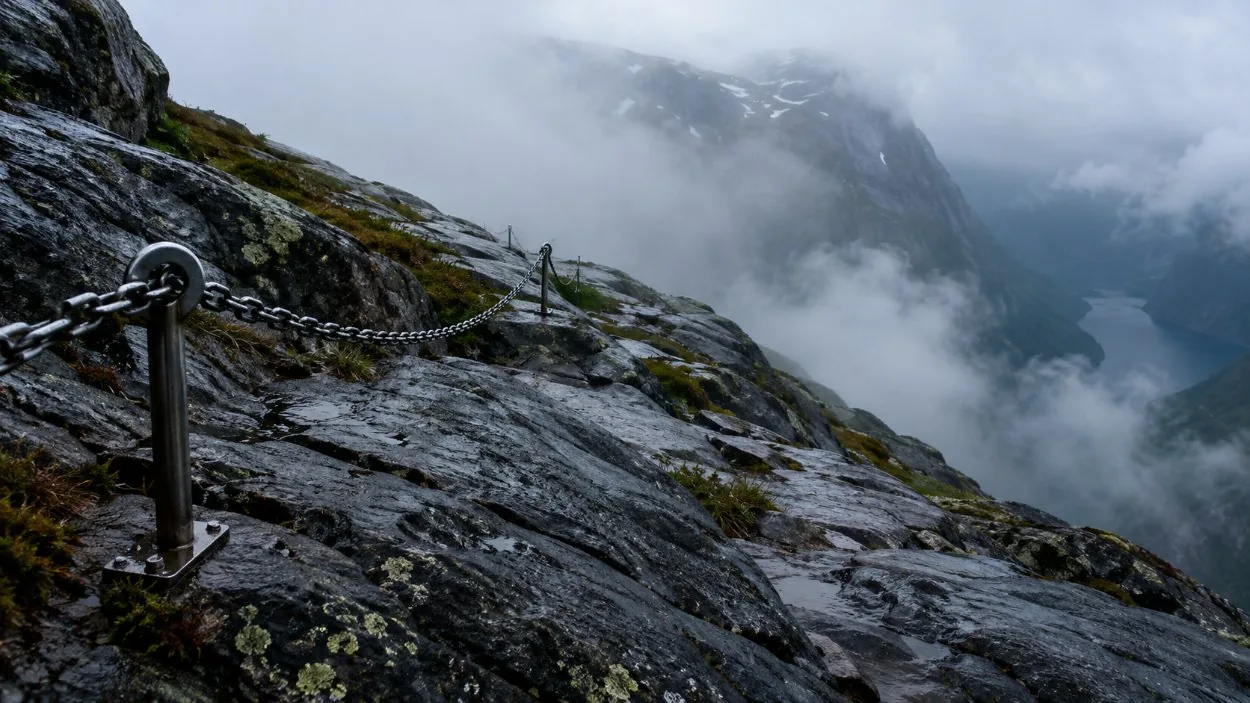
Undramatic. Wet rock on a steep slab. A turned ankle at hour seven. A group that started at two in the afternoon finishing the descent in poor light, two and a half hours of driving still ahead of them. Hikers do get injured here — broken bones, bad landings — and it happens on the trail rather than at the boulder. There is no published count of them and I am not going to invent one.
The four things that actually raise risk
What works
- An early start, which is the single biggest safety decision of the day
- Weather you are willing to turn back for: strong wind, heavy rain, fog
- Footwear that grips wet rock, and a headlamp you do not expect to use
- A guide, if you would rather somebody else made the weather call
Worth knowing
- Setting off in the afternoon on a 6 to 10 hour hike
- Pressing on because you drove two and a half hours to get here
- Treating the descent as the easy half; it is where people get hurt
- Assuming the plateau has the same weather as the car park
None of that is exotic. It is the ordinary arithmetic of a long mountain day, and it is why the most useful page on this site is not about danger at all but about what time to leave. The honest safety picture, split between boulder, trail and jumpers, is on how safe is it.
The riskiest moment at Kjerag is usually in the car park, at two in the afternoon, when somebody decides they can still make it. I watched that decision get made every season and it is the one I would take back from people if I could.
What there is to book
Not the trail. Nobody sells a ticket to Kjerag and nobody could, because there is no gate and nobody standing at one. What you pay for is the ride out of Stavanger and the guide who walks it with you, and the road up is open for about five months a year. The options are laid out on the bookings page and compared on the decision page.
Frequently asked questions
Is Kjerag one of the most dangerous hikes in the world?
No. That reputation comes from counting BASE jumping accidents as hiking accidents. The boulder has no recorded fatality from a fall.
What actually injures hikers at Kjerag?
Falls on the trail, mostly on the descent and mostly on wet rock. No figures are published for them.
How do I reduce the risk?
Start early, respect wind, heavy rain and fog, and wear boots that grip wet rock. See how safe is it.