The complete guide to hiking Kjerag
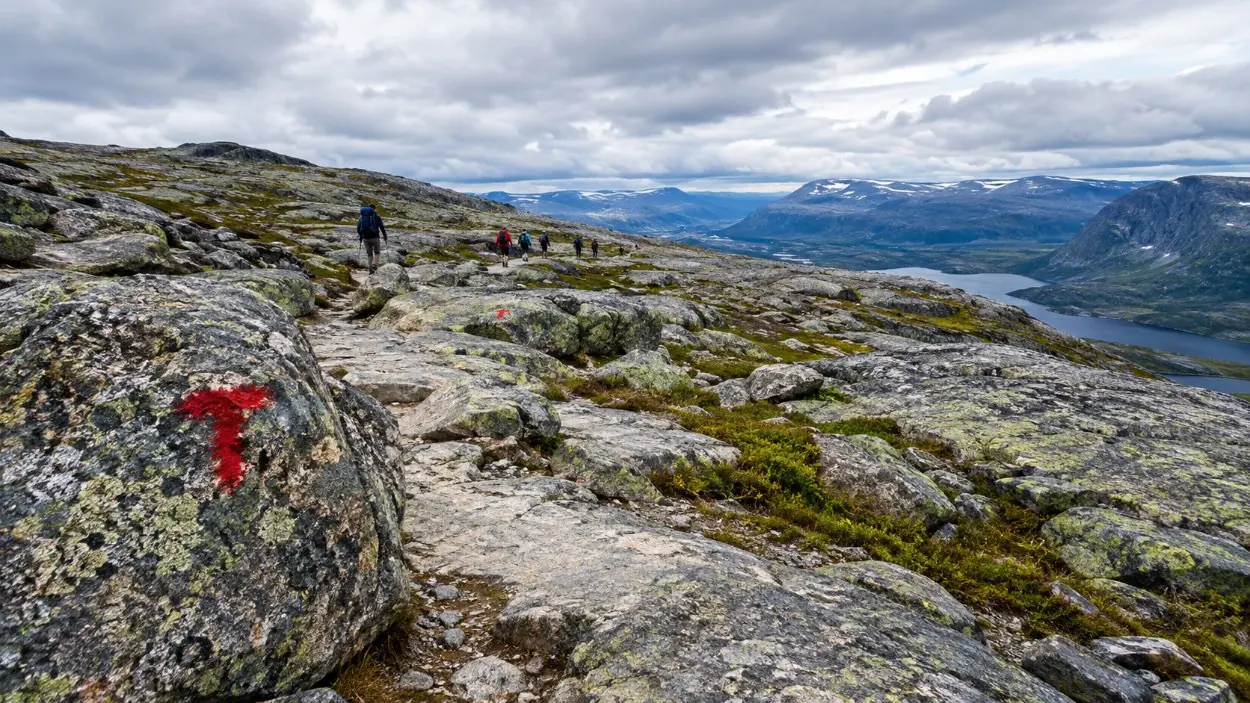
Kjerag is a mountain on the south side of the Lysefjord in Sandnes municipality, Rogaland, Norway, rising to about 1,084 metres and holding in one of its crevices Kjeragbolten, a boulder of roughly five cubic metres suspended 984 metres above the water and reached on a free, unguided trail of about 11 km round trip. I grew up on the Sirdal side and worked eleven summer seasons in the service building at Øygardstøl, the car park at the top of the hairpins where the trail starts, so I watched a great many people come back down. Almost everything that goes wrong here starts with fear pointed at the wrong object.
The boulder is not the dangerous part
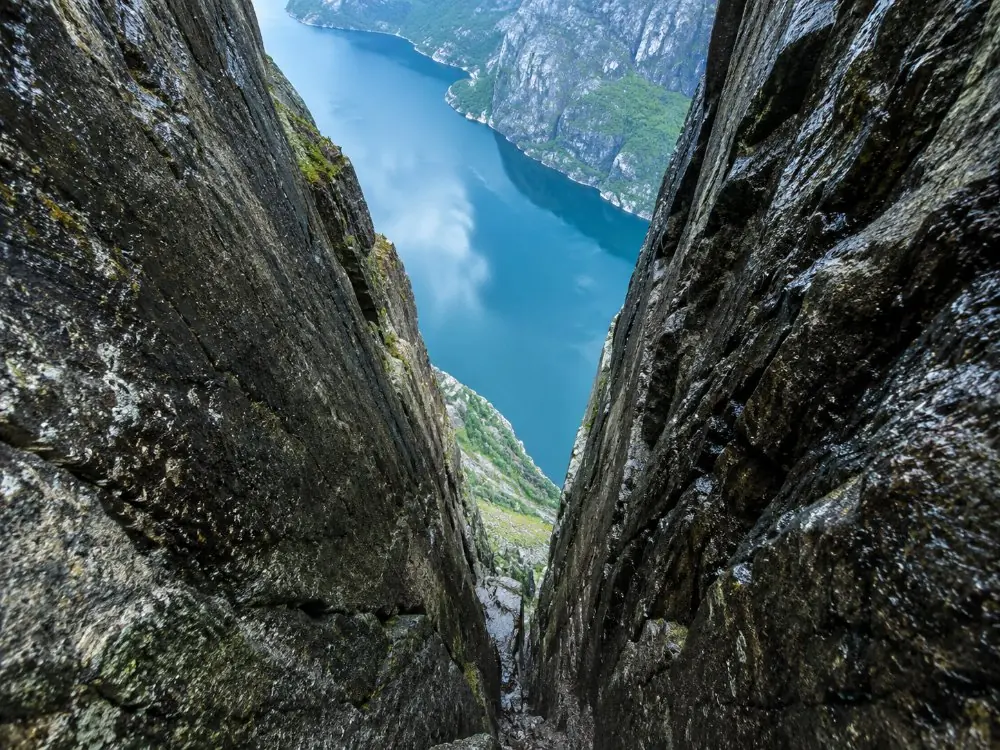
People arrive having read that this is the scariest hike in the world, frightened of a stone. Stepping onto Kjeragbolten is a stride of about half a metre, from the side, onto a flat top, with rock on both sides of the crevice, and no equipment is needed or provided. There is no recorded death from falling off the boulder in Norwegian history; one widely-cited safety write-up recorded no fatality and no accident there as of the middle of 2023. That is a record rather than a promise. What sends people back down the hairpins in an ambulance is the trail: falls on wet slab away from the boulder, broken bones, turned ankles. Read how safe it is first.
What kills people at Kjerag is a different sport
Kjerag is one of the best-known BASE jumping cliffs in the world. Jumpers have been killed there, and accidents are reported most years. Those numbers travel, attach themselves to the word Kjerag, and end up in front of somebody who only wants to walk up a hill and take a photograph. The two activities share a cliff and nothing else: BASE jumping and how many have died.
Nobody sells a ticket to this
The trail is free, open, unguided, unstaffed and ungated: no permit, no time slot, no booking. So anything sold with Kjerag in the title is selling the ride out of Stavanger, the guide, or on one product the boat instead of the mountain. People write to me convinced they have to reserve a place. They do not: the hike is free and what the day involves.
The road is the constraint, not your fitness
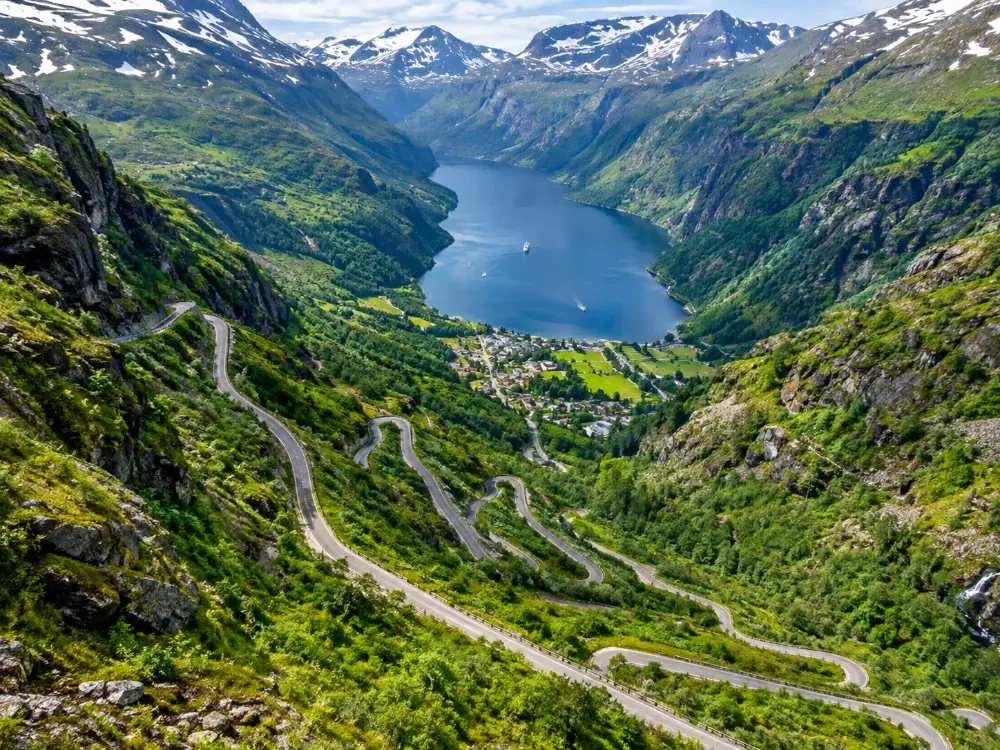
The trailhead sits at the top of 27 hairpin bends on Fv500 above Lysebotn, and that road is shut by snow for most of the year. It generally opens in late May or early June and closes again in October or November, and the several hundred metres of chain bolted along the steepest slabs come down with it. The parking facility runs roughly from the middle of May to the end of October. So the first planning question is not whether you can manage the climb. It is whether the road is open on your dates: the road and the hairpins.
From Stavanger by car it is E39 and Rv450 through Sirdal, roughly three hours. The other way in is the Kolumbus ferry MS Lysefjord from Lauvvik to Lysebotn, with roughly two or three departures a day depending on the season. What does not exist is a regular public bus from Stavanger to Lysebotn. Seasonal tourist buses run in peak season and that is the whole of it, which is why a booked tour is the reliable option without a car: without a car.
Three climbs, two descents, and one named dip
About 11 km round trip and 6 to 10 hours for most people, which is Visit Norway’s own figure. Fit walkers manage around six, quoted by the fjord region’s tourist board as the fast end rather than the normal one, so do not plan a day on anything shorter. The total climb is around 760 to 800 metres, and it surprises people because it arrives in three pieces: up, down into Litle Stordal, up again, down again, up onto the plateau. Then you reverse all of it on tired legs. Visit Norway names strong wind, heavy rain and fog as conditions to turn back for. What no forecast tells you is that the car park can sit in full sunshine while the plateau is inside a cloud. See the trail and weather and rain.
How the boulder got there
Kjeragbolten is a glacial deposit, left during the last glaciation around 50,000 BC and wedged into the crevice when the land rebounded after the ice melted faster than the sea rose. It has been sitting there a very long time and shows no sign of moving: the boulder.
The neighbours, if Kjerag is the wrong answer
Preikestolen is on the north side of the same fjord: a flat plateau 604 metres above the water, about 8 km round trip, 4 to 5 hours, no chains, and an hour from Stavanger rather than two and a half. It is the easier of the two by a wide margin. Trolltunga, over in Odda, is a much longer day, roughly two and a half times the length of Kjerag. Those three are the big three: Kjerag or Preikestolen and Kjerag or Trolltunga.
What I would tell someone coming once
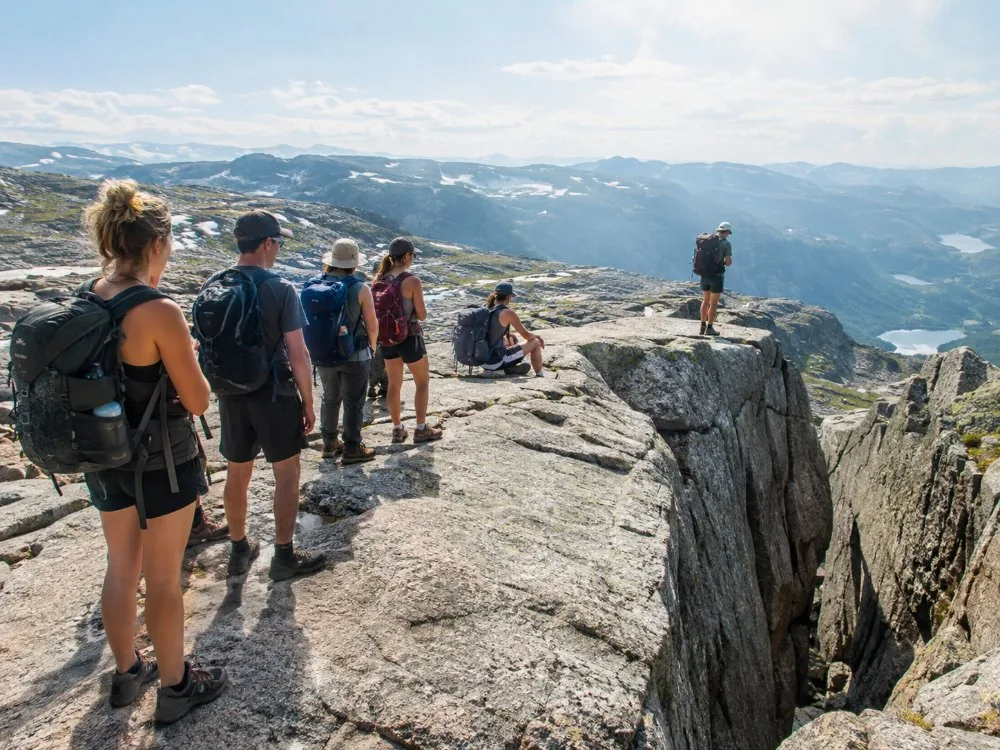
Come inside the open season and start early: six to ten hours on the trail plus two and a half hours of road at each end is the whole day, with no margin in it. Wear boots that grip wet rock; I am opinionated about footwear and I have earned it. Turn back for wind, heavy rain or fog without feeling you have failed, because the people who turned round at the first chain were usually right. Expect a queue at the boulder on an August afternoon. The emergency number in Norway is 113. And if the road is shut, take the fjord from the water instead: is it worth it.
Ready to book the ride out?
The walk costs nothing and needs no ticket. What is worth booking is the transport and the guide, because there is no regular bus to Lysebotn and the road is only open about five months a year. The comparison is on which tour to choose.
A word about what that widget books. It books the ride out of Stavanger and, on most of these, a guide. It does not book Kjerag. Nobody sells a ticket to the trail: it is free, open and unguided, and anyone who gets themselves to the top of the road can walk up it without paying a soul.
Frequently asked questions
Do you need a ticket for Kjerag?
No. There is no ticket, no permit, no time slot and no gate. The trail is free and open when the road is: the free-hike page.
How long and how hard is the Kjerag hike?
About 11 km round trip and 6 to 10 hours, with roughly 800 metres of climbing spread over three ascents and two descents: how hard it is.
Has anyone ever fallen off Kjeragbolten?
There is no recorded death from falling off the boulder in Norwegian history. The fatalities people read about belong to BASE jumping: has anyone fallen.
When is the Kjerag hike open?
Roughly late May or early June to October or November, because the road to the trailhead closes with the snow and the chains come down with it: the season.