Kjerag weather, and hiking it in the rain
Snow is a road problem before it is a trail problem
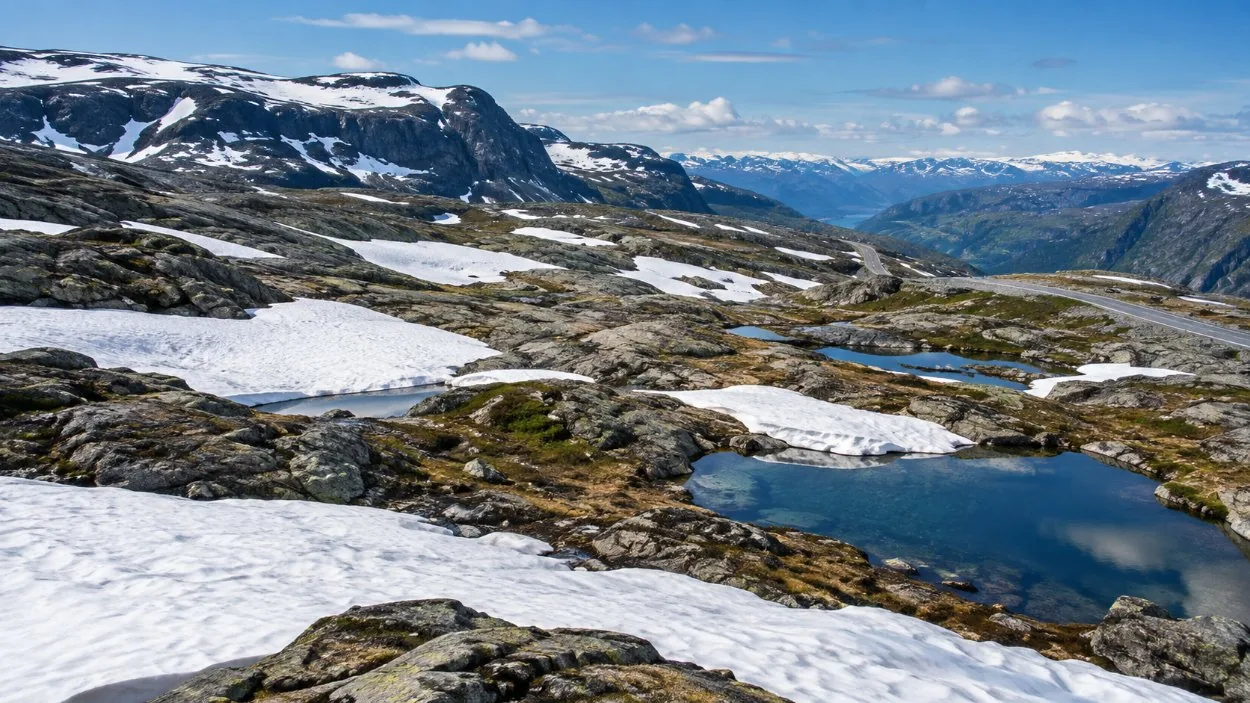
Most mountains close because of what is on them. Kjerag effectively closes because of what is on the pass. The trailhead sits at the top of twenty-seven hairpin bends, and when those are under snow, the car park is shut, the service building is shut, and the several hundred metres of chains that make the steep slabs manageable have been taken down and stored for the winter.
The dates move every year with the snow. Late May in a light year, well into June after a heavy one, and the autumn closure is just as unwilling to be predicted. Anyone quoting you an exact opening date in February is guessing. Check the road before you check the forecast: the road and the hairpins, and the full seasonal picture on the season page.
Rain, and what it does to bare rock
Western Norway is wet and the trail is slab. That is the entire mechanism. Dry rock grips and the walking is a pleasure; wet rock does not, and the chains stop being a handrail and become the reason you are still upright. The injuries at Kjerag happen on the trail rather than at the boulder, and wet rock is the common factor in most of them, usually on the descent, usually in the afternoon.
Light rain is a normal Kjerag day and people walk it constantly. Heavy rain is different, and heavy rain on a party that is already slow is the combination to refuse. If it starts raining hard while you are between the second climb and the plateau, the correct answer is often to turn round rather than press on for the photograph: hiking in the rain.
Fog, which is the local speciality
This is the one I would most like visitors to take seriously, because it is the one that looks harmless from below. I have stood at the car park in warm sunshine and watched cloud sitting on the plateau all morning, and watched people set off into it in shirtsleeves because the weather in front of their eyes was fine. The plateau is a few hundred metres higher than the car park and it makes its own conditions.
In fog the plateau is featureless bare rock. Route-finding that was trivial in clear weather becomes work, the temperature drops, and the view you came for does not exist. Nobody can promise you the view on any given day, in any month, and I would rather say so plainly than let you book a trip believing otherwise.
Wind
It comes up the fjord side and it arrives on the open sections, which are the sections where you would most like to feel steady. Strong wind on a chained slab is unpleasant. Strong wind on the plateau, near an edge with no railing anywhere, is a reason to keep everybody well back and to consider whether today is the day. The plateau has no shelter of any kind.
What works
- Light rain is a normal day here and the trail is walked in it constantly
- Chains on the steep sections give you something solid when the slab is damp
- A clear September day is the best combination of ground and light
- Guides on the mountain all week know what the rock is doing better than a forecast
- The Lysefjord by boat is a good day in weather that would spoil the mountain
Worth knowing
- Heavy rain turns the descent into the hardest part of a long day
- Fog on the plateau while the car park is sunny catches people out every season
- Wind up the fjord side hits on the exposed sections
- No shelter anywhere on the route once you leave the service building
- The road, and the chains with it, disappear for most of the year
When I would turn back
When the rain is heavy enough that the slab under the chains has gone dark and greasy. When the wind is making me think about my footing rather than my direction. When the cloud is down far enough that I cannot see the next marker. And when the clock says the descent will be done in the dark, whatever the sky is doing. Each of those alone is enough; two of them together is not a decision at all.
Turning back is not a wasted day, and I say that as somebody who watched a great many people turn back at the first chain and drive home perfectly happy. The mountain is not going anywhere and the road will be open again next summer.
Look up at the plateau from the car park before you lace your boots. If it is wearing a cap of cloud and you are standing in sunshine, pack the warm layer and the shell you were about to leave in the car. That single glance has saved more days here than any forecast.
Dressing for it
A shell that stops wind and rain, a warm layer carried rather than worn, boots that grip wet rock, and thin gloves for cold chains. Cotton is the wrong material in every position. The full argument is on what to wear and the list is on what to bring.
What to do with a bad-weather day
Go to the water instead. The Lysefjord cruise runs on a fjord rather than a plateau, takes three and a half hours, and shows you Hengjanefossen, the Vagabond's Cave and Preikestolen from directly below, in weather that would make Kjerag a poor idea: the cruise. Or take the shorter hike on the other side of the fjord, which is four to five hours rather than up to ten: the Preikestolen hike.
Booking with the weather in mind
A guide will not improve the forecast, but somebody who has been on the mountain all week is a better judge of today than an app is. Availability below.
A word about what that widget books. It books the ride out of Stavanger and, on most of these, a guide. It does not book Kjerag. Nobody sells a ticket to the trail: it is free, open and unguided, and anyone who gets themselves to the top of the road can walk up it without paying a soul.
Frequently asked questions
Can you hike Kjerag in the rain?
In light rain, yes, and people do. Heavy rain makes the descent the hard part of the day: hiking in the rain.
When is the road to Kjerag closed?
Roughly November to late May, depending on snow, and the chains come down with it: the road page.
Will I get the view from the plateau?
Nobody can promise it. Fog sits on the plateau while the car park below is in sunshine: is it worth it.
When should you turn back?
For strong wind, heavy rain or fog, and whenever the descent would finish after dark: the safety page.