The best time to visit Kjerag
Why the road decides everything
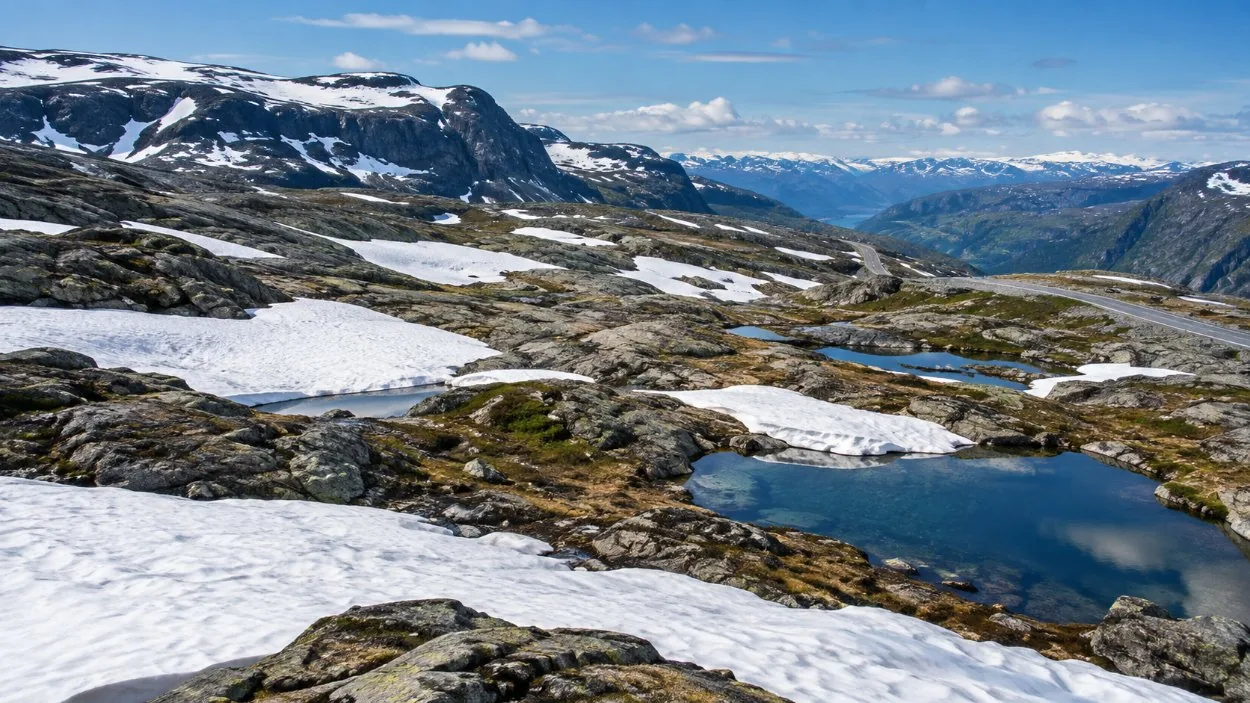
Most mountains have a season because of snow on the mountain. Kjerag has a season because of snow on the pass. The trailhead sits at the top of twenty-seven hairpin bends and those bends are shut for most of the year. When they are shut there is no practical way to reach the start of the walk, the car park is closed, the service building is closed, and the chains that make the steep slabs manageable have been removed and stored. Every other planning question at Kjerag comes after this one. The road has its own page: the road and the hairpins.
The dates move. Late May in a light snow year, well into June after a heavy winter, and the autumn closure is equally unwilling to be pinned down. Anyone telling you a precise opening date months in advance is guessing. What is dependable is the shape: roughly five months open, roughly seven months shut.
Month by month, honestly
May. A gamble. The road may open late in the month or may not. The high fells still hold snow, the car park facility is only just waking up, and the chains may or may not be back in place. I would not book flights around May unless Kjerag is a bonus rather than the point.
June. The road is normally open by early June and the light is extraordinary: long evenings that make a late finish far less frightening than the same finish in September. Some snow can linger in the dips. This is a good month.
July and August. The busiest weeks by a wide margin, the warmest ground, and the queue for the boulder photograph on an August afternoon. Everything is open and everything is full. If you are coming in these months, start early and read the crowds page.
September. My own pick. The trail is in good condition, the light is still usable, the crowds have thinned noticeably, and the plateau in autumn colours is worth the shorter day. You need to watch the forecast more carefully than in July.
October. The end of the window. The car park runs to roughly the end of the month and the road may close at any point from here on. Short daylight and a six-to-ten-hour trail is a combination that needs an early start and a plan for turning round.
November to April. The road is shut. The chains are down. The hike requires winter equipment and a guide, and it becomes a mountaineering day rather than a walk. The private guided trip runs year-round and carries seasonal equipment including crampons if needed, which is the only sensible way most visitors will see Kjerag in this half of the calendar: the private hike.
What works
- Late May to October gives you road, chains, car park and the information desk
- June has the longest light, which forgives a slow party
- September is the quietest good month on this mountain
- The Norwegian mountain summer runs roughly June to September
- Booked tours take the road and the timing off your hands entirely
Worth knowing
- Opening and closing dates move with the snow and cannot be promised
- July and August bring a real queue at the boulder
- October days are short against a trail that can take ten hours
- Outside the season the chains are removed, not merely snowed over
- Fog sits on the plateau in any month, including the warm ones
What the weather does inside the season
Being inside the window is not the same as having a good day. Western Norway is wet, the trail is bare rock, and wet rock is the reason the chains are there. Visit Norway's advice is to turn back for strong wind, heavy rain or fog, and all three occur in July as readily as in October. The particular Kjerag trick is fog that sits on the plateau while the car park a few hundred metres below is in full sunshine, which sends people up in shirtsleeves into weather they never saw. More on weather and rain and on hiking in the rain.
Choosing a month if you also want Preikestolen
Preikestolen is on the north side of the same fjord, about eight kilometres round trip and four to five hours, with no chains and a much longer practical season. If you want both cliffs in one trip, the two-day version puts Preikestolen and a Lysefjorden cruise on the first day and Kjerag on the second, sleeping in Lysebotn between them: the two-day trip. The comparison between the two hikes is on Kjerag or Preikestolen.
If your dates are fixed and they fall outside the road season, do not spend the trip hoping. Book the Lysefjord from the water instead and come back for the mountain another year. The fjord from a boat in April is a genuinely good day; Kjerag in April is not a day you can have.
The best month, if you want one answer
September, and then June. September for the condition of the ground and the quiet; June for the light. July and August are perfectly good if you accept the company and start early. The month-by-month version of this argument, written for people choosing between Norwegian hikes rather than Kjerag dates, is on the best month page.
Booking inside the window
The guided day out of Stavanger runs on the road season. If your dates are near the edges of it, the availability calendar below is a more reliable indicator of whether the pass is open than anything I can write in advance.
A word about what that widget books. It books the ride out of Stavanger and, on most of these, a guide. It does not book Kjerag. Nobody sells a ticket to the trail: it is free, open and unguided, and anyone who gets themselves to the top of the road can walk up it without paying a soul.
Frequently asked questions
When is Kjerag open?
Effectively whenever Fv500 is open, generally late May or early June until October or November: the road page.
Can you hike Kjerag in winter?
Only with winter equipment and a guide, and with the chains removed. The private trip runs year-round: the private hike.
What is the best month for Kjeragbolten?
September for conditions and quiet, June for the long light: the best month page.
Are the chains up all year?
No. They are removed when the road closes for winter and reinstalled when it opens: the chains page.